
Choosing an orthodontist near Chestnut Hill is a decision that deserves more than a quick Google search and a phone call. A consultation is your opportunity to evaluate the practice as much as the practice evaluates your teeth. The right questions reveal how a provider thinks, what the treatment process actually looks like, and whether the plan being proposed is built around your specific case or a standard template.
Dr. Anthony Farrow serves the Chestnut Hill area from two Philadelphia locations, Mt. Airy and Center City, and welcomes informed, curious patients. Here are the five questions that matter most before you commit to treatment.

Why the Questions You Ask Before Treatment Matter
Most patients walk into a consultation prepared to listen, not prepared to evaluate. That is understandable. Orthodontic treatment is not something most people do more than once or twice in a lifetime, and it is natural to defer to the professional in the room. But the consultation is also the moment before any financial or clinical commitment is made, which is precisely when questions carry the most weight.
A provider who welcomes thorough questions, answers them directly, and takes the time to explain the reasoning behind a treatment recommendation is showing you something important about how your care will be managed for the next one to two years. A provider who deflects, rushes, or gives vague answers to direct questions is also showing you something important.
Question 1: Are You a Board-Certified Orthodontic Specialist?
This is the most fundamental question and the one most patients never think to ask. An orthodontist is a dentist who has completed two to three additional years of full-time specialty training focused exclusively on tooth movement, bite correction, and jaw development. A general dentist who offers Invisalign or braces as a side service is not an orthodontic specialist, regardless of how the practice markets itself.
Board certification from the American Board of Orthodontics goes a step further. It is a voluntary credential that requires passing rigorous written and clinical examinations beyond the specialty training itself. Not every licensed orthodontist pursues board certification. Asking specifically about board certification gives you a clear, verifiable answer rather than a general credential claim.
What a strong answer sounds like:
A direct confirmation of specialty training, board certification status, and the examining body. Dr. Anthony Farrow is a board-certified orthodontic specialist serving patients near Chestnut Hill from the Mt. Airy and Center City offices.
Question 2: What Treatment Options Are Available for My Specific Case?
The answer to this question tells you a great deal about how the practice approaches treatment planning. A provider who recommends the same option to almost everyone, regardless of clinical presentation, is not tailoring the plan to you. A quality orthodontic specialist evaluates your case, considers all viable treatment paths, and explains the trade-offs between them.
The treatment menu matters too. Practices that offer only one or two options have less flexibility. Look for a provider who offers traditional braces, clear ceramic braces, Invisalign, and, where clinically appropriate, options like lingual braces. Adults, especially, should ask this question directly, as adult orthodontic treatment has expanded significantly and the range of options suitable for adult cases is broader than many patients realize.
Question 3: What Does the Full Cost Include, and What Happens if Treatment Takes Longer?
Cost transparency before treatment starts is non-negotiable. A clear breakdown of what the quoted figure includes protects you from surprises later. Specifically, ask whether the following are included:
| Cost Item | Typically Included? | Ask to Confirm |
| Records and diagnostic imaging | Usually included | Confirm at the consultation |
| All aligner sets or bracket adjustments | Should be included | Ask about refinements or additional series |
| Retainers at the end of treatment | Sometimes separate | Always ask, retainer cost adds up |
| Emergency visits during treatment | Often included | Confirm the scope of what qualifies |
| Extended treatment if the timeline runs long | Varies by practice | Ask specifically about this scenario |
Treatment timelines extend for real reasons: patients who do not wear aligners as prescribed, cases that are more complex than the initial imaging suggested, or growth patterns in younger patients that require additional monitoring. Knowing the policy before you sign protects both sides.
Question 4: Is Early Treatment Recommended for My Child, and Why?
If you are bringing a child to a consultation, this question is essential. Early orthodontic treatment, sometimes called Phase 1, is clinically appropriate for some children and entirely unnecessary for others. A provider who recommends it for every child who walks through the door is not applying clinical judgment. A provider who dismisses it without evaluation is not being thorough. The answer should be specific to what the exam and X-rays revealed about your child’s jaw development. The benefits of early orthodontic treatment are real when they are indicated, but the indication needs to be clinical, not financial.
Age seven is the standard first-evaluation recommendation from the American Association of Orthodontists. At that age, an experienced orthodontist can identify crossbites, significant crowding, and jaw development concerns while growth is still on the child’s side. Most children evaluated at seven are simply placed in observation. A small number benefit from targeted early intervention.
Question 5: What Does the End Result Look Like, and How Is It Protected?
The consultation is the right time to discuss not just the treatment plan but the expected outcome and how that outcome is maintained. Ask to see projected results, ideally via digital simulation. Ask what the retainer protocol is after treatment ends. A smile that has been carefully corrected over 18 months can shift significantly within months without consistent retainer wear. A comprehensive smile makeover is only as lasting as the retention phase that follows it, and that phase deserves as much attention as the active treatment.
Strong orthodontic practices build retention planning into the treatment conversation from the start, not as an afterthought when the brackets come off. Ask whether retainers are fixed, removable, or both, and what the replacement policy is.
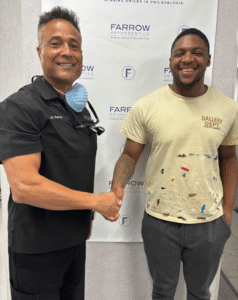
About Dr. Anthony Farrow: Orthodontist Near Chestnut Hill
Chestnut Hill residents looking for an orthodontist near Chestnut Hill have access to Dr. Anthony Farrow through two convenient Philadelphia locations. The Mt. Airy office at 1510 E. Wadsworth Avenue is the closest location to Chestnut Hill and serves the neighborhood regularly.
The Center City office at 1601 Walnut St, Suite 1315, serves patients across Philadelphia. Both locations offer complimentary consultations, full treatment option reviews, and the kind of transparent cost discussion described above. Dr. Farrow treats patients of all ages, from children benefiting from early evaluation to adults pursuing treatment for the first time.
Mt. Airy Orthodontist Office
Address: 1510 E. Wadsworth Avenue, Philadelphia, PA 19150
Phone: (215) 247-9060
Center City Orthodontist Office
Address: 1601 Walnut St, Suite 1315, Philadelphia, PA 19102
Phone: (215) 569-9060
Schedule Your Consultation with Dr. Anthony Farrow Near Chestnut Hill Today
Frequently Asked Questions
How do I find a good orthodontist near Chestnut Hill?
Look for a board-certified orthodontic specialist, not a general dentist offering braces as a side service. Confirm they offer multiple treatment options, provide a transparent cost breakdown at the consultation, and take time to explain the reasoning behind their recommendation. Dr. Anthony Farrow serves Chestnut Hill from the Mt. Airy office at (215) 247-9060.
Is the consultation free at Dr. Anthony Farrow’s offices?
Yes. Dr. Anthony Farrow offers complimentary consultations at both the Mt. Airy and Center City offices. The consultation includes a clinical evaluation, treatment options review, and a full cost breakdown before any commitment is made.
Does Dr. Anthony Farrow treat adults as well as children?
Yes. Both locations treat patients of all ages. Adult orthodontic treatment has expanded significantly in recent years, and Dr. Farrow offers the full range of treatment options for adult cases. Read more about adult orthodontic treatment trends on the practice website.
At what age should my child first see an orthodontist near Chestnut Hill?
The American Association of Orthodontists recommends a first evaluation by age seven. Dr. Farrow offers early evaluations and can identify developing concerns while growth is still on the child’s side. Read more about early orthodontic treatment benefits to understand what a Phase 1 evaluation looks for.
What orthodontic treatment options are available at Dr. Anthony Farrow’s offices?
Dr. Farrow offers traditional braces, clear ceramic braces, and Invisalign, with treatment plans tailored to the patient’s clinical case and goals. Both the Mt. Airy and Center City offices are fully equipped to handle the full range of cases, from simple alignment corrections to complex bite work.