

What Happens After Braces? The Step Most People Overlook
Finishing braces is a major milestone—your teeth are finally straight, your bite is aligned, and you get to enjoy a confident new smile. But what many patients don’t realize is that the work isn’t entirely over. There’s an important next step that plays a huge role in maintaining those results: wearing your retainer after braces.
At Farrow Orthodontics in Philadelphia, PA, we see many patients who believe removing their braces means their treatment is complete. In reality, the success of your orthodontic journey depends heavily on what you do afterward.
Let’s walk through exactly what happens after braces, why retainers are essential, and how to keep your smile looking amazing for life.
Why You Need a Retainer After Braces
Once your braces come off, your teeth are not fully settled into their new positions. The bone and tissues around your teeth need time to settle in their new position. Without proper support, your teeth can slowly move back to where they were before—this is called relapse. That’s where retainers come in. They hold your teeth in place long enough for your body to adjust, protect all the progress you’ve made, and ensure your smile stays straight for years to come.
What Can Happen If You Skip Your Retainer?
- Teeth slowly shift or crowd again.
- Gaps may reappear
- Your bite can relapse
- You might need braces (or aligners) again.
A retainer is simple, painless, and the most effective way to make sure your new smile stays picture-perfect.
Types of Retainers You May Get
At Farrow Orthodontics, we choose the right retainer type based on your treatment needs, comfort preferences, and lifestyle.
1. Hawley Retainers
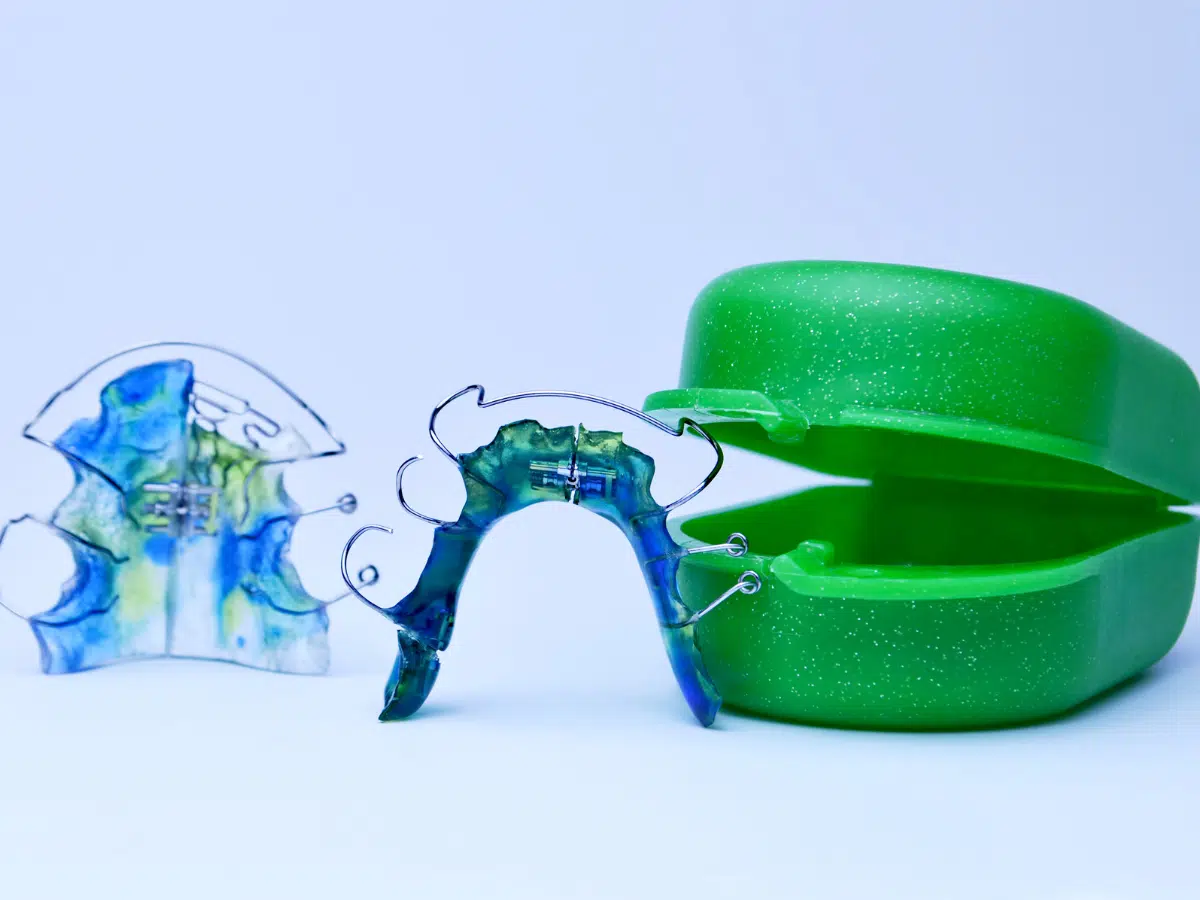
A classic retainer made of acrylic and wire. Durable, adjustable, and long-lasting.
2. Clear Retainers
A clear retainer is a transparent, removable appliance that fits over your entire arch of teeth. Similar to Invisalign trays, it has no wires and is easy to clean—just brush it daily.
3. Permanent (Bonded) Retainers
A tiny wire is fixed behind your front teeth. Ideal for patients at high risk of shifting.
Your orthodontist will help you understand which option best supports your long-term results.
What to Expect Immediately After Braces Come Off
Here’s what the first days and weeks usually involve:
1. Teeth May Feel Slightly Loose
This is normal. Your teeth are settling and need retainer support.
2. Retainer Fitting Appointment
We’ll take impressions or scans and create your custom-made retainer.
3. Initial Full-Time Wear
Most patients start with full-time retainer wear (22 hours a day) for the first few months.
4. Gradual Transition to Nighttime Wear
After your orthodontist approves, you’ll shift to wearing your retainer only at night.
5. Mild Tightness When Wearing Your Retainer
This means the retainer is doing its job and keeping your teeth stable.
How Long Do You Need to Wear Your Retainer?
The truth is simple:
You need to wear a retainer for life — at least at night.
Don’t worry! Nighttime wear is comfortable and easy once it becomes part of your routine.
General Guidelines
- First 3–6 months: Full-time wear
- After 6–12 months: Nighttime wear
- Long-term: Continue nightly or a few nights a week to prevent relapse
Everyone’s treatment is unique, so your orthodontist at Farrow Orthodontics will give you personalized instructions.
Caring for Your Retainer
Your retainer is part of your long-term smile care. With proper maintenance, it can last for years.
Cleaning Tips
- Rinse your retainer after every removal.
- Brush gently with a soft toothbrush.
- Use clear, liquid soap (not toothpaste—too abrasive).
- Keep it away from hot water, as it can distort the retainer.
- Soak it occasionally in a retainer-cleaning solution.
Storage Tips
- Always keep it in the case—napkins get thrown away.
- Keep away from pets; dogs especially love chewing retainers.
- Store in a cool, dry place
Signs You Need a Retainer Check or Replacement
If you notice any of the following, call Farrow Orthodontics:
- The retainer feels too tight.
- Cracks or breaks
- Warping
- It doesn’t fit snugly.
- You haven’t worn it in a while
- It’s lost or damaged.
Getting a replacement early prevents teeth from shifting.
What If You Forget to Wear Your Retainer?
It happens! If you’ve skipped your retainer for a few days:
- Try putting it back in — if it fits snugly, continue wearing it full-time for a few days.
- If it feels painful, extremely tight, or doesn’t fit, schedule an appointment right away.
The earlier we address shifting, the easier it is to correct.
Why Choose Farrow Orthodontics in Philadelphia, PA
At Farrow Orthodontics, we’re dedicated to creating beautiful, stable smiles that last a lifetime. Our team provides:
- High-quality custom retainers
- Advanced post-treatment monitoring
- Friendly, patient-first care
- Long-term smile maintenance plans
- Expertise in preventing relapse
Your orthodontic journey doesn’t end when braces come off—we’re here to guide you through the final, most important phase.
Ready to Protect Your New Smile?
If you’ve recently finished braces or lost your retainer, we’re here to help.
Schedule your retainer check or replacement with Farrow Orthodontics in Philadelphia, PA, today. Your smile deserves long-lasting support.
FAQs
1. Why is a retainer after braces so important?
It prevents your teeth from shifting back to their old positions and protects your treatment results.
2. How often am I supposed to use my retainer?
Most patients start with full-time wear and eventually transition to nighttime-only.
3. What should I do if I lose my retainer?
Contact Farrow Orthodontics immediately to prevent relapse.
4. Can my teeth move even after years of wearing a retainer?
Yes. Teeth naturally shift with age, which is why long-term retainer use is recommended.
5. How long do retainers last?
With good care, removable retainers can last for years. Permanent retainers may last even longer.